GDP Counts a Hurricane as Growth and Your Care Work as Nothing
The world's most powerful economic number measures the velocity of dollars, not the quality of life. Here's exactly what GDP counts, the giant things it ignores, and why a wartime metric still runs the world.
When a hurricane destroys a city, GDP goes up. When a factory poisons a river, GDP goes up. When a parent cares for a child at home, it counts as zero. The world's most powerful economic metric measures almost the opposite of what most people assume.
What GDP actually counts
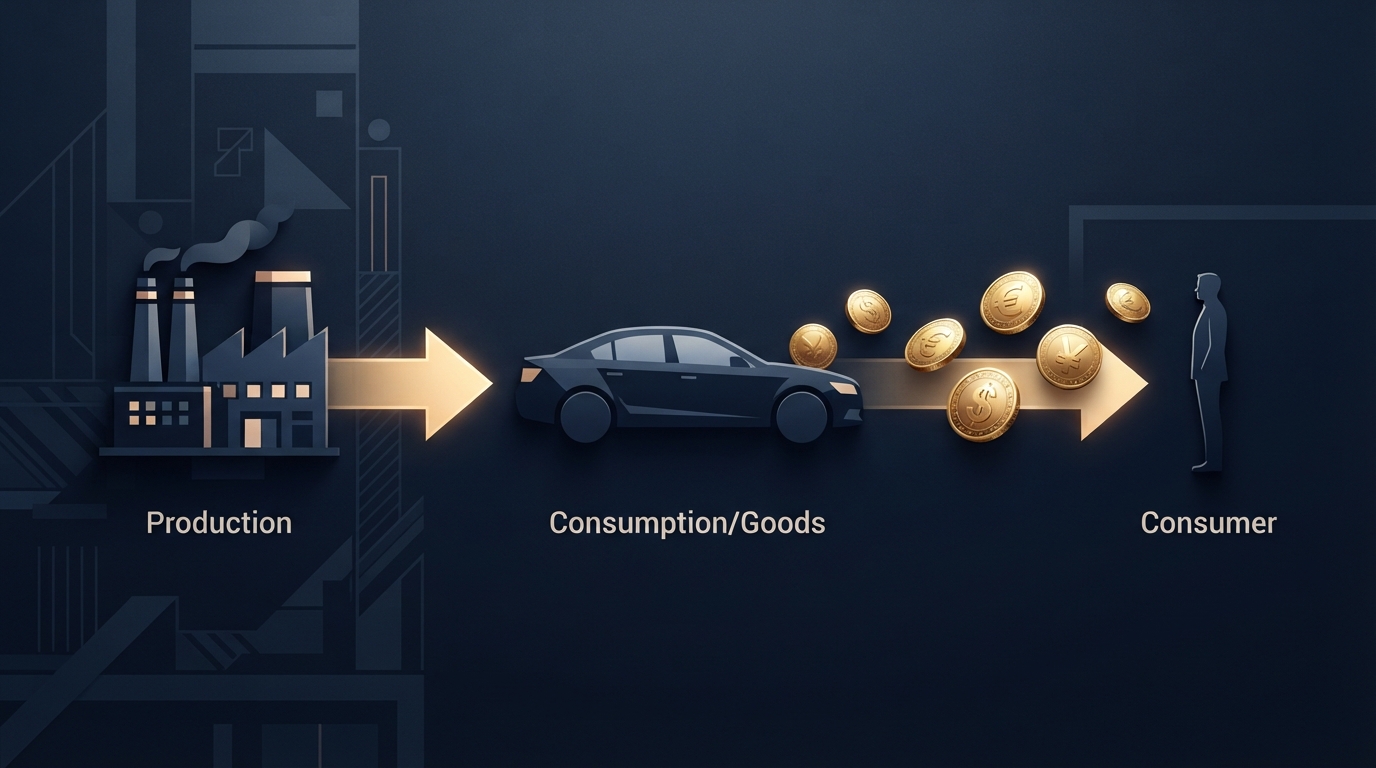
Strip away the jargon and the definition is startlingly narrow: every market transaction for a final good or service, within a country's borders, in one year.
A factory sells steel to a carmaker — doesn't count, that's intermediate. The carmaker sells you the finished car — counts. Your neighbor mows your lawn for cash — counts. You mow your own lawn — invisible, because no dollars changed hands.
Why a wartime metric still rules
In the 1930s no government knew how big its economy actually was — Congress could not tell whether the Depression was worsening. Simon Kuznets built the first national accounts in 1934 so Roosevelt could see whether New Deal spending was working.
When a hurricane destroys a city, GDP goes up. When a factory poisons a river, GDP goes up. But when a parent cares for a child at home? Zero. Nothing counted.
Watch at 00:00
Common questions
- Does higher GDP mean people are better off?
- Not necessarily. GDP measures the total value of market transactions, not how the gains are distributed or whether quality of life improved. A country can grow while most households feel no benefit.
- Why does disaster cleanup increase GDP?
- Because rebuilding generates market transactions — construction, materials, services — all of which count. GDP records the spending, not the loss that made the spending necessary.
- Are there better alternatives to GDP?
- Several exist — measures that weigh well-being, distribution or sustainability — but none has replaced GDP. Its strengths are exactly why it endures: it is simple, updated quarterly, and lets you compare any two economies with a single number.
From the video









More from Macro Plainly

Japan Bought 5 Trillion Yen of Foreign Assets in Two Weeks: Why Now?

Why Mass Layoffs Boost Stock Prices Instantly

Rent as a Recession Warning

The 2020 Negative Oil Freakout

Insurance Exits Erase Home Value

The $250 Tariff Mystery: Why Retail Prices Don't Jump

Why Unemployment Drops But You Still Feel It
