Banks Don't Lend Your Savings — They Type New Money Into Existence
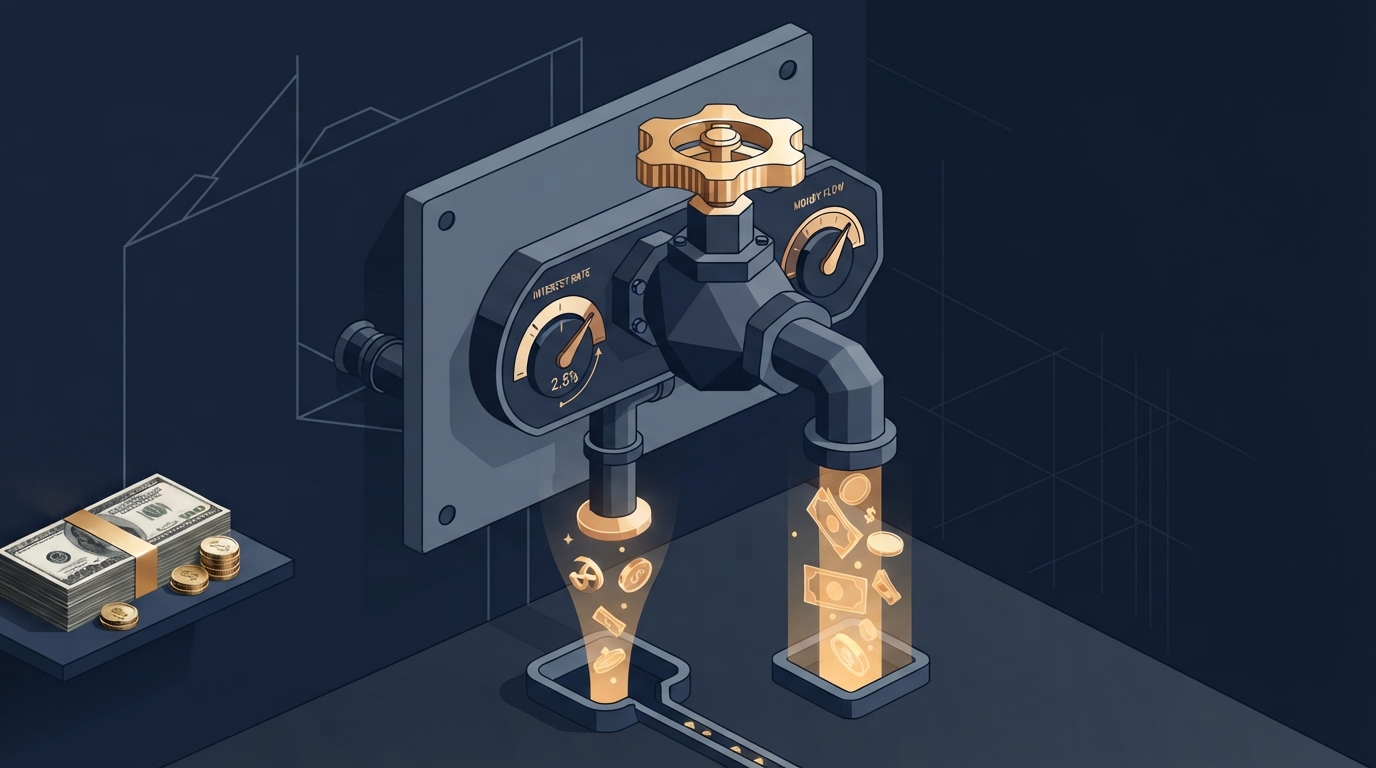
The cash in your wallet is a rounding error. Most money is created the instant a bank approves a loan — here's the mechanism, and the three things that stop it running to infinity.
The cash in your wallet is a rounding error. Most money never touches a printing press — it is created the moment a bank approves a loan.
That is why, in developed economies, bank deposits are the overwhelming majority of the money supply and physical cash is a sliver.
So what stops banks creating infinite money?
Three limits keep it in check.
Why this makes recessions worse
Put those three together and the money supply is not fixed — it swells and shrinks with the credit cycle. In a boom, everyone borrows and the supply expands. In a bust, loans go bad, banks tighten, and money creation reverses as old loans are repaid faster than new ones appear.
That deposit is brand-new money — it didn't exist ten seconds ago. The bank didn't move someone else's savings; it created a liability and called it a deposit.
Watch at 00:32
Common questions
- If banks create money, isn't that just printing?
- No physical printing is involved, but the effect on the money supply is real. The money is created as a deposit and destroyed again when the loan is repaid — it expands and contracts rather than accumulating like printed cash.
- Where does the interest come from if the principal was created from nothing?
- The principal is created as a deposit; the interest is paid out of the borrower's income and existing money in circulation, which is part of why aggregate debt tends to require continued lending to service.
- Does this mean my savings aren't loaned out?
- Not in the textbook 'savings become loans' sense. A bank's capacity to lend is limited by capital and regulation, not by first collecting deposits — the deposit is the result of the loan, not its source.
From the video









More from Macro Plainly
Japan Bought 5 Trillion Yen of Foreign Assets in Two Weeks: Why Now?

Why Mass Layoffs Boost Stock Prices Instantly

Rent as a Recession Warning

The 2020 Negative Oil Freakout

Insurance Exits Erase Home Value

The $250 Tariff Mystery: Why Retail Prices Don't Jump
Why Unemployment Drops But You Still Feel It
